If you’re exploring tooth replacement options, you’ve probably come across both mini dental implants and regular dental implants. Understanding the difference between these two solutions is one of the most important steps toward making a confident decision about your smile. I’m Dr. Shahdad Arami, DDS, and here at Northridge Dental Group, I help patients every day choose the implant type that best fits their unique needs. Let me walk you through everything you need to know about mini dental implants vs regular implants so you can feel fully informed.
What Are Regular Dental Implants?
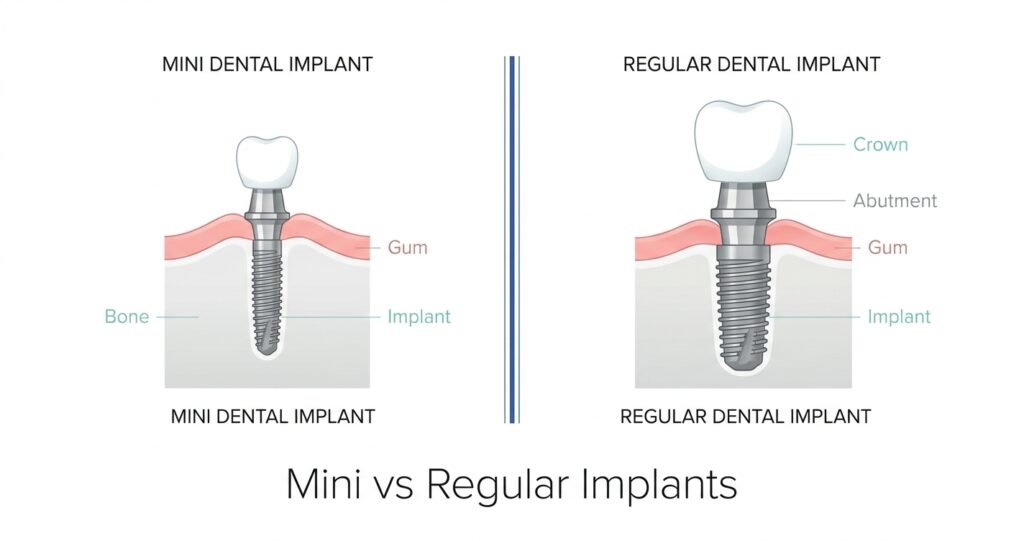
Regular dental implants – also called standard or conventional implants – are the most common type used in modern dentistry. They consist of three parts: a titanium post, an abutment, and a crown. The titanium post is surgically placed into the jawbone, where it fuses with the bone over several months through a process called osseointegration. Once fully healed, the abutment connects the post to a custom-made crown that looks and feels like a natural tooth.
Standard implants typically range from 3.5 to 6 millimeters in diameter. Their larger size gives them exceptional strength and stability. They are ideal for replacing a single tooth, multiple teeth, or even supporting a full-arch restoration. For patients in Northridge and the surrounding San Fernando Valley communities, regular implants remain the gold standard for long-term tooth replacement.
What Are Mini Dental Implants?
Mini dental implants, often abbreviated as MDIs, are smaller versions of traditional implants. They are typically less than 3 millimeters in diameter – roughly half the width of a standard implant. Instead of a three-piece design, mini implants are usually a single solid piece with a ball-shaped end that protrudes above the gum line.
Because of their smaller size, mini implants require a less invasive placement procedure. In many cases, they can be placed without a surgical flap or extensive drilling. This makes them an appealing option for patients who may not be candidates for conventional implants due to bone loss, medical conditions, or other factors.
Key Differences Between Mini and Standard Dental Implants
Size and Design
The most obvious difference when comparing mini dental implants vs regular dental implants is size. Standard implants are wider and longer, which allows them to bear heavier biting forces. Mini implants are narrower and shorter, making them suitable for areas with limited bone width. The single-piece design of mini implants also means fewer components and a simpler overall structure.
Surgical Procedure
Regular implant placement is a surgical procedure that often involves creating a flap in the gum tissue, drilling a precise hole in the jawbone, and placing the implant post. Healing time typically ranges from three to six months before the final restoration is attached. Mini implants, on the other hand, can often be placed through a small pilot hole with minimal tissue disruption. Many patients receive their mini implants and a temporary restoration in a single visit.
Healing and Recovery Time
Because mini implants are less invasive to place, recovery is generally faster. Most patients experience less swelling and discomfort after the procedure. Standard implants require a longer healing period to allow full osseointegration, but this extended healing is what gives them their remarkable long-term durability.
Load-Bearing Capacity
Standard implants can support individual crowns, bridges, and full-arch prosthetics. They handle the full force of chewing and biting with ease. Mini implants are best suited for stabilizing lower dentures or replacing smaller teeth in areas with less biting pressure. According to a study published in the Journal of Oral Implantology, mini implants demonstrated a survival rate of approximately 92.1% over a five-year period, which is strong but slightly lower than the 95% or higher survival rate typically reported for standard implants over the same timeframe.
Bone Requirements
One major advantage of mini dental implants is that they often work for patients with reduced jawbone density or volume. Patients who have experienced significant bone loss may not have enough bone to support a standard implant without first undergoing a bone grafting procedure. Mini implants can sometimes bypass that step entirely, which saves time and reduces overall treatment complexity. For many of our patients in Northridge and nearby Granada Hills, this is a significant benefit.
When Are Mini Dental Implants the Better Choice?
Mini implants shine in specific clinical situations. They are an excellent option for:
- Stabilizing a loose lower denture – mini implants can snap a denture firmly into place, dramatically improving comfort and confidence while eating or speaking.
- Patients with insufficient bone – when bone grafting is not desired or medically advisable, mini implants offer a practical alternative.
- Patients seeking a faster, less invasive procedure – the streamlined placement process appeals to patients who want quicker results with less downtime.
- Budget-conscious patients – mini implants generally cost less per unit than standard implants, making them more accessible for patients working within a tighter budget.
If you’re considering dental implants in Northridge, we can evaluate your bone structure and overall oral health to determine which type is most appropriate for you.
When Are Regular Dental Implants the Better Choice?
Standard implants remain the preferred option in most cases because of their superior strength and longevity. They are the better choice when:
- Replacing a single tooth – a standard implant with a crown provides the most natural-looking and longest-lasting result.
- Supporting a bridge or full-arch restoration – the wider diameter handles the stress of supporting multiple teeth.
- Long-term durability is a priority – with proper care, conventional implants can last 20 years or more. Research from the American Academy of Periodontology and published in peer-reviewed journals shows that standard implants maintain a success rate above 95% at the 10-year mark.
- Adequate bone volume is available – when the jawbone is healthy and dense, standard implants integrate more predictably and offer maximum stability.
Our team evaluates each patient’s jaw structure using advanced imaging technology. This allows us to plan precisely and recommend the implant size and type that will deliver the best possible outcome.
Cost Comparison: Mini Implants vs Regular Implants
Cost is always an important consideration. Mini dental implants are generally less expensive than conventional implants. A single mini implant may cost 40% to 60% less than a standard implant, primarily because the procedure is simpler and requires less chair time. However, it’s important to consider the full picture. Standard implants often last significantly longer and can support more complex restorations, which may make them the more cost-effective choice over a lifetime.
We always discuss both options openly with our patients so you can make an informed decision based on your goals, health, and budget. If you’d like to learn more about how we approach full mouth dental implant treatment, we’ve covered that topic in detail as well.
Can Mini Implants Be Used With Dentures?
Absolutely. In fact, one of the most popular uses for mini implants is stabilizing removable dentures. Traditional dentures rest on the gums and can slip, rock, or cause sore spots. When mini implants are placed beneath a denture, the denture snaps onto the implant heads and stays firmly in place. Patients immediately notice improved chewing ability and comfort.
For patients in the Northridge area who wear dentures and want a significant quality-of-life improvement without major surgery, implant-supported dentures using mini implants can be life-changing.
Which Implant Type Is Right for You?
The best way to determine whether mini dental implants or regular dental implants are right for you is through a thorough evaluation. During your consultation, we review your dental and medical history, take detailed scans of your jaw, and discuss your goals. Every mouth is different, and the right solution depends on factors like bone density, the location of the missing tooth, your overall health, and what type of restoration you need.
Both mini and standard implants are safe, effective, and well-supported by clinical research. The key is matching the right tool to the right situation. That’s what we do best at Northridge Dental Group.
Frequently Asked Questions
What is the main difference between mini dental implants and regular dental implants?
The main difference is size. Mini dental implants are less than 3 millimeters in diameter, while regular implants range from 3.5 to 6 millimeters. This size difference affects the surgical process, healing time, load-bearing capacity, and the types of restorations each implant can support. Regular implants are stronger and more versatile, while mini implants are less invasive and work well for denture stabilization.
Are mini dental implants as durable as standard implants?
Mini dental implants are durable and have strong survival rates, but standard implants generally last longer under heavy biting forces. Standard implants have a 10-year success rate above 95%, while mini implants show approximately 92% survival at five years. For lightweight restorations like denture stabilization, mini implants perform very well over the long term.
Do mini dental implants require bone grafting?
In most cases, mini dental implants do not require bone grafting. Their smaller diameter allows them to be placed in jawbones with less available width or density. This is one of the biggest advantages for patients who want to avoid the additional time and cost of a bone grafting procedure before implant placement.
How much do mini dental implants cost compared to regular implants?
Mini dental implants typically cost 40% to 60% less than regular implants per unit. The reduced cost comes from a simpler surgical procedure and shorter chair time. However, regular implants may offer better long-term value because they last longer and can support a wider range of restorations. Your dentist can help you weigh the cost against the expected lifespan of each option.
Can I get mini dental implants in one visit?
Yes, many patients receive mini dental implants in a single office visit. Because the procedure is minimally invasive, the implants can often be placed and loaded with a temporary or permanent restoration on the same day. This is especially common when mini implants are used to stabilize an existing denture, allowing patients to leave the office with a secure, functional smile right away.
Written by Dr. Shahdad Arami, DDS – Northridge Dental Group