Implant Dentistry
A dental implant replaces the root of a missing tooth with a titanium post that fuses to your jawbone, topped with a custom crown. It is the closest thing in dentistry to getting your own tooth back, and every phase of it happens in this office.

Placed by our in-house periodontists and restored by Dr. Shahdad Arami, DDS.

How dental implants work

About dental implants
Implant dentistry in Northridge, CA
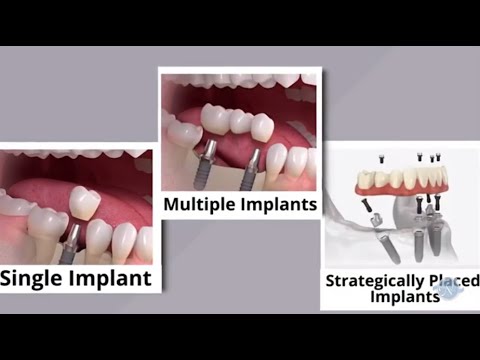
A dental implant is a small post, usually made of titanium, that serves as a substitute for the root of a missing tooth. Because titanium fuses with living bone, the implant effectively becomes part of your jaw rather than sitting on top of it.
The three parts of an implant
The post
A titanium screw placed into the jawbone, taking the place of the natural tooth root. Minor surgery is required to insert it.
The abutment
A connector placed on or built into the top of the implant, joining the post to the replacement tooth above it.
The crown
A replacement tooth, custom-fabricated to match the shape and shade of your natural teeth, completing the implant.
The systems we place
We work with Zimmer Biomet Dental, Straumann, and Nobel Biocare. These are established manufacturers with long clinical track records, which matters more than it might sound: if a component ever needs servicing or replacing years from now, parts for these systems will still be available. Placement is handled by our in-house periodontists and oral surgery team, and the restoration on top is completed here as well.
All-on-4 Implants
Can four implants replace all of the teeth on the top or bottom of your mouth? Thanks to advances in implant technology, the answer is yes.
You do not need a separate implant for every missing tooth. Four precisely placed implants on the top of your mouth, and four on the bottom, are enough to restore a full arch. That is the whole idea behind the technique.
Because the implant is made of titanium, it has the unique ability to fuse to living bone and function as part of it. Over time the implant becomes part of your jawbone, serving as a strong, long-lasting foundation for your new teeth.
That bone fusion does something else worth knowing about. It can prevent future bone loss in your jaw, which helps maintain a more youthful facial structure along with better oral health. When tooth roots are missing, the bone that held them gradually recedes. Implants interrupt that process.

Fewer implants needed
Four per arch rather than one per tooth means fewer surgical sites and a less involved procedure overall.
Shorter treatment time
With fewer implants to place and integrate, the timeline from start to finished restoration is meaningfully reduced.
Lower overall cost
Fewer components and fewer appointments bring the total cost down compared with replacing each tooth individually.
Implants gallery
Implant work completed at Northridge Dental Group.


Individual results vary. Treatment time and outcome depend on bone volume, the number of teeth being replaced, and your overall oral health.
Frequently asked questions about dental implants
Because the titanium post fuses with living bone, an implant is designed to be a permanent replacement. The crown attached to it may need replacing over the years, the same as any restoration, but the implant itself is built to stay.
No. For a full arch, four precisely placed implants can support a complete set of replacement teeth. That means fewer surgical sites, less overall treatment time, and lower cost than replacing each tooth individually.
Placing an implant is minor surgery done under local anesthetic, so you should not feel the procedure itself. Some soreness during healing is normal. If dental anxiety is a concern, ask us about sedation options.
Zimmer Biomet Dental, Straumann, and Nobel Biocare. These are established manufacturers with long clinical track records, which matters if a component ever needs servicing years down the line.
Yes, and this is one of their more significant advantages. When a tooth root is missing, the jawbone in that area gradually resorbs. Because an implant fuses with the bone and transmits chewing forces into it, it helps preserve both bone volume and facial structure.
Considering implants? Book a consultation.
Implant Dentistry
A dental implant replaces the root of a missing tooth with a titanium post that fuses to your jawbone, topped with a custom crown. It is the closest thing in dentistry to getting your own tooth back, and every phase of it happens in this office.
Placed by our in-house periodontists and restored by Dr. Shahdad Arami, DDS.