
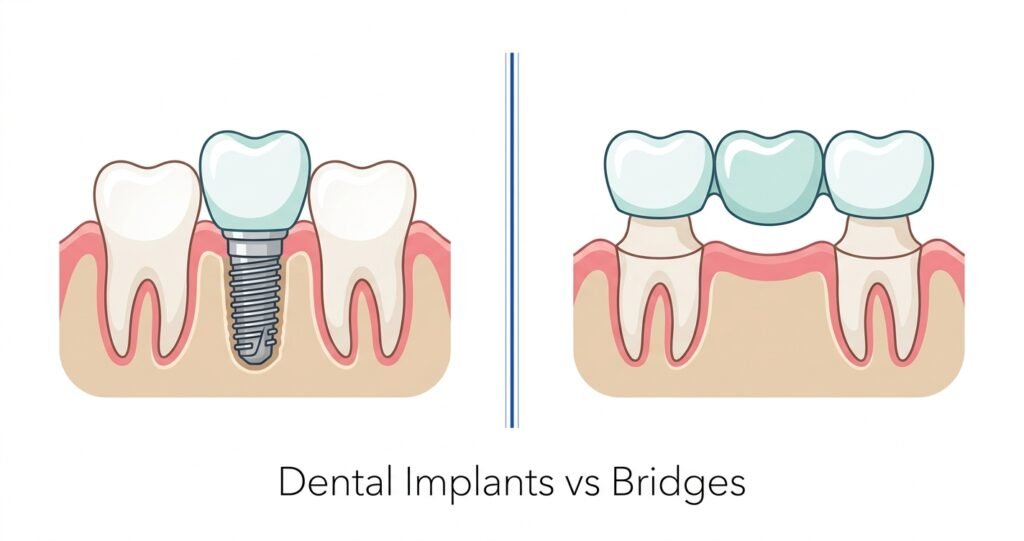
If you are missing one or more teeth, you have probably wondered about the best way to restore your smile. The two most popular options are dental implants and dental bridges. I am Dr. Shahdad Arami, DDS, and at Northridge Dental Group, I help patients in Northridge and surrounding communities make confident decisions about tooth replacement every day. In this guide, I will walk you through everything you need to know when comparing dental implants vs bridges so you can choose the solution that fits your mouth, your lifestyle, and your budget.
What Are Dental Implants?
A dental implant is a small titanium post that a dentist or periodontist places directly into your jawbone. It acts like an artificial tooth root. Once the implant fuses with the bone – a process called osseointegration – a custom crown is attached on top. The result looks, feels, and functions like a natural tooth.
Implants can replace a single tooth, several teeth, or even a full arch. They are a standalone solution, which means they do not rely on neighboring teeth for support. This independence is one of the biggest advantages when patients weigh implants versus bridges.
What Is a Dental Bridge?
A dental bridge is a fixed restoration that literally “bridges” the gap left by a missing tooth. It consists of one or more artificial teeth, called pontics, held in place by crowns cemented onto the natural teeth on either side of the space. Those supporting teeth are called abutments.
Bridges have been used in dentistry for decades. They are reliable, relatively fast to place, and effective for restoring chewing function. However, they do require altering healthy teeth, which is an important factor to consider.
Dental Implants vs Bridges: Key Differences
Longevity and Durability
One of the most significant differences between dental implants and bridges is how long each lasts. According to the Journal of Dental Research, dental implants have a survival rate of approximately 95 percent over 10 years. Many implants last 20 years or even a lifetime with proper care. Traditional bridges, on the other hand, typically last between 5 and 15 years before they need replacement. Over a patient’s lifetime, an implant can actually be the more cost-effective choice because it rarely needs to be redone.
Impact on Surrounding Teeth
To place a dental bridge, the dentist must file down the two teeth next to the gap. Those teeth receive crowns that anchor the bridge. This means healthy tooth structure is permanently removed. With a dental implant, neighboring teeth are left completely untouched. Preserving natural tooth structure is always a priority at our Northridge practice, so this is a benefit I discuss with nearly every patient.
Bone Health and Preservation
When you lose a tooth, the jawbone in that area begins to shrink because it no longer receives stimulation from chewing forces. A dental implant transmits force directly into the bone, just like a natural root. This stimulation helps maintain bone density. A bridge sits above the gum line and does not stimulate the bone underneath. Over time, bone loss can change the shape of your jaw and face. If preserving your facial structure matters to you, implants offer a clear advantage.
Aesthetics and Function
Both implants and bridges can produce beautiful results. Modern ceramic materials make either option look natural. However, implants tend to provide a more lifelike appearance because the crown emerges from the gum tissue just like a real tooth. Bridges can sometimes show a visible gap between the pontic and the gum, especially as bone resorption progresses. In terms of chewing ability, implants restore nearly 100 percent of natural bite force, while bridges restore a high percentage but may not feel quite as strong.
Treatment Timeline
A dental bridge can usually be completed in two to three visits over a few weeks. Implants require a longer timeline. After the implant post is placed, healing typically takes three to six months before the final crown is attached. While the wait can feel long, the payoff in durability and bone preservation is substantial. For patients in Northridge and the greater San Fernando Valley who need a faster solution, a bridge may be the right interim or permanent choice.
Cost Comparison
Upfront, a dental bridge is generally less expensive than an implant. A single implant with its abutment and crown can range from $3,000 to $5,000 or more, depending on the case. A three-unit bridge may cost between $2,000 and $5,000. However, because bridges may need replacement and the abutment teeth can develop problems over time, the long-term cost of a bridge can approach or even exceed the cost of an implant. I always encourage patients to think about the total investment over 20 to 30 years, not just the initial price.
When Is a Dental Implant the Best Choice?
An implant is often the ideal option when you want the longest-lasting, most natural replacement for a missing tooth. You are a good candidate for an implant if you have adequate jawbone density, healthy gums, and no uncontrolled systemic conditions such as diabetes. Non-smokers tend to heal faster and have higher success rates. If the teeth next to the gap are healthy and strong, choosing an implant means you can keep them intact.
According to the American Dental Association, dental implants are considered a safe, well-established treatment for replacing missing teeth when patients are properly evaluated. A thorough examination, including digital imaging, helps us determine whether an implant is right for you.
When Is a Dental Bridge the Better Option?
A bridge can be an excellent choice when the teeth on either side of the gap already have large fillings or crowns and would benefit from being covered. Bridges also work well for patients who cannot undergo surgery due to medical reasons or who prefer a shorter treatment timeline. If bone loss is significant and you do not wish to undergo bone grafting, a bridge can restore your smile effectively without a surgical procedure.
If you want to learn more about how we approach complex restorative cases, I recommend reading our post on the benefits of dental implants for tooth replacement. It covers the advantages of implants in greater detail.
Caring for Your Implant or Bridge
No matter which option you choose, daily oral hygiene is essential. Implants should be brushed and flossed just like natural teeth. Bridges require a floss threader or a water flosser to clean underneath the pontic where food and plaque can collect. Regular dental checkups at our Northridge office allow us to monitor your restoration and catch any issues early.
A study published in the International Journal of Oral and Maxillofacial Implants found that patients who maintained consistent oral hygiene and attended regular follow-up visits had implant success rates exceeding 97 percent over 10 years. Good habits truly make the difference.
Combining Implants and Bridges
In some cases, the best plan involves both. An implant-supported bridge uses two or more implants to anchor a bridge, eliminating the need to alter natural teeth while replacing multiple missing teeth at once. This hybrid approach is especially useful for patients missing three or more teeth in a row. We discuss this option frequently with patients who visit us from Northridge, Granada Hills, and other nearby neighborhoods.
For a deeper look at full-mouth restoration options, check out our guide on understanding full mouth reconstruction. It covers how different treatments work together to rebuild a complete, healthy smile.
Making the Right Decision for Your Smile
Choosing between a dental implant and a bridge is a personal decision that depends on your oral health, your goals, and your budget. Both options can give you a beautiful, functional smile. The best path forward starts with a thorough evaluation and an honest conversation about your needs. At Northridge Dental Group, we take the time to explain every option so you can feel confident in your choice. Whether you lean toward an implant, a bridge, or a combination of both, our team is here to guide you every step of the way.
Frequently Asked Questions
Is a dental implant better than a bridge for replacing a missing tooth?
In many cases, a dental implant is the preferred option because it preserves jawbone, does not require altering adjacent teeth, and can last a lifetime with proper care. However, a bridge may be better for patients who cannot undergo surgery or who need a faster solution. The best choice depends on your individual oral health and goals.
How long do dental implants and bridges last?
Dental implants can last 20 years or more, and many last a lifetime. Studies show a 95 percent survival rate at 10 years. Bridges typically last between 5 and 15 years before they need to be replaced. Regular dental visits and good oral hygiene help both restorations last as long as possible.
Are dental implants more expensive than bridges?
The upfront cost of a dental implant is usually higher than a bridge. However, because implants last longer and do not require changes to nearby teeth, they can be more cost-effective over your lifetime. It is important to consider the long-term value, not just the initial price, when making your decision.
Can I get a dental implant if I have bone loss in my jaw?
Yes, in many cases you can still receive a dental implant even with some bone loss. A bone grafting procedure can rebuild the jawbone to provide a stable foundation for the implant. Your dentist or periodontist will use digital imaging to evaluate your bone and create a personalized treatment plan.
What happens to the bone under a dental bridge over time?
Because a dental bridge does not stimulate the jawbone the way a natural tooth root or implant does, the bone beneath the pontic can gradually shrink. This process is called bone resorption. Over time, this can create a gap between the bridge and the gum and may change the shape of your jaw. Dental implants help prevent this bone loss by transmitting chewing forces directly into the bone.
Written by Dr. Shahdad Arami, DDS – Northridge Dental Group