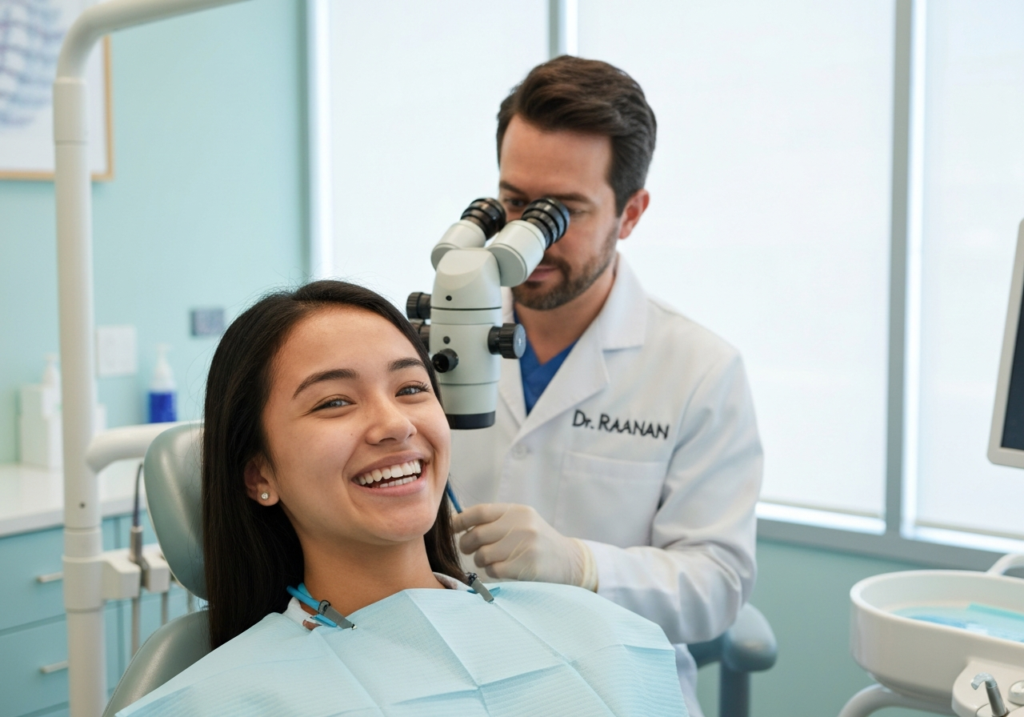
As a cosmetic dentist serving the wonderful community of Northridge and the surrounding areas, I have heard one question more than any other. It isn’t about cavities, and it isn’t about braces. It is simply: “Dr. Arami, how can I get my smile brighter without ruining my teeth?”
It makes perfect sense. A bright, white smile is associated with health, youth, and confidence. Living here in Southern California, where smiles are practically part of our uniform, the pressure to have pearly whites is real. However, in my years of practice, I have also seen the damage caused by misinformation. I have treated patients who scrubbed their enamel away with harsh charcoal or burned their gums with ill-fitting generic trays.
My goal as your local dentist is to bridge the gap between wanting a stunning smile and keeping your mouth healthy. If you are looking for how to whiten teeth safely, you have come to the right place. Let’s dive into the science, the myths, and the professional methods that actually work.
Understanding Why Your Teeth Discolor
Before we can fix the problem, we have to understand what is happening inside your mouth. Teeth are not solid white blocks; they are complex living tissues. The outer layer, called enamel, is like a microscopic crystal lattice. Over time, this lattice picks up pigments from the things we enjoy most in life.
If you start your morning with a dark roast coffee or end your week with a glass of red wine, you are introducing staining agents to your enamel. Even brightly colored berries and tomato sauces can leave their mark. In the dental world, we call these extrinsic stains. These are on the surface and are generally easier to remove.
However, there is a second type of discoloration called intrinsic staining. This happens when the inner structure of the tooth, the dentin, darkens or yellows. This can happen due to aging, certain medications, or trauma to the tooth. As we get older, our enamel naturally gets thinner, showing more of the yellowish dentin underneath. Understanding this difference is crucial because safe whitening requires treating the specific type of stain you have.
The Safety Hierarchy: Professional vs. DIY
When patients visit my office in Northridge, I explain that whitening is a chemical process. We usually use hydrogen peroxide or carbamide peroxide. These agents penetrate the enamel and break down the discolored molecules through oxidation. Sounds fancy, right? It basically means we are breaking the stain into tiny pieces so light can pass through, making the tooth look whiter.
The safety of this process depends entirely on two factors: the concentration of the whitening agent and how well your gums are protected. This is where the difference between a cosmetic dentist and a box from the drugstore becomes huge.
Professional In-Office Whitening
This is the gold standard for safety and speed. In my office, I use high-concentration gels that are activated chemically or with light. Because the gel is strong, I apply a protective barrier to your gums first. This ensures that the whitening agent only touches your teeth, not your sensitive soft tissue. This is the fastest way to learn how to whiten teeth safely because you are under supervision the entire time.
Custom Take-Home Trays
If you prefer to whiten at home, I often recommend custom-fitted trays. We take an impression of your teeth and create a tray that fits you perfectly-like a puzzle piece. This prevents the gel from leaking out onto your gums. It is far safer than generic trays which are “one size fits all” (but usually fit no one).
The Data on Whitening Popularity
You aren’t alone in wanting a brighter smile. The demand for cosmetic dentistry has skyrocketed recently.
Data Point 1: According to the American Academy of Cosmetic Dentistry (AACD), whitening is the single most requested cosmetic dental procedure, with the global teeth whitening market projected to reach over $8 billion by 2026. This shows just how many people are seeking this confidence boost.
Navigating Over-the-Counter Options
Walk down the aisle of any pharmacy in the San Fernando Valley, and you will see hundreds of boxes promising a Hollywood smile. Are they safe? Generally, yes, if used exactly as directed. However, they have limitations.
Whitening Strips: These are flexible plastic strips coated in a thin layer of peroxide. They work, but they often slip. If the strip touches your gums for too long, it causes chemical burns. Furthermore, the strips are flat, but your teeth are curved. This means the strips often miss the spaces between teeth, leading to uneven whitening.
Whitening Toothpaste: Most of these do not actually bleach the tooth. Instead, they use abrasive particles to scrub surface stains off. If you use them too aggressively, you risk scratching your enamel, which can actually make your teeth look darker in the long run as the enamel thins.
Comparison Chart: Whitening Methods
To help you visualize the differences, I have put together this comparison chart based on what I see in my practice.
| Method | Safety Level | Speed of Results | Gum Protection |
|---|---|---|---|
| In-Office Professional | High (Supervised) | Immediate (1 Hour) | Excellent (Custom Barrier) |
| Custom Home Trays | High (Custom Fit) | Fast (1-2 Weeks) | Good (Physical Fit) |
| OTC Strips | Moderate | Slow (2-4 Weeks) | Poor (High Leakage) |
| Charcoal/DIY | Low (Abrasive) | Variable/Risky | None |
Natural Remedies: Fact vs. Fiction
I love that my patients are interested in natural health. However, in dentistry, “natural” does not always mean “safe.” There is a massive trend on social media regarding activated charcoal and baking soda. While baking soda is a mild abrasive and is generally safe in moderation, charcoal can be too harsh. It acts like sandpaper on your teeth.
Another dangerous trend is using lemon juice or apple cider vinegar. These are highly acidic. Acid erodes enamel. Once enamel is gone, it does not grow back. Using acid to whiten teeth is like using a sandblaster to clean a window-you might get the dirt off, but you will destroy the glass in the process.
For a deeper dive into how different products affect your oral health, the American Dental Association (ADA) provides excellent resources on approved ingredients.
Managing Sensitivity
One of the biggest fears people have regarding whitening is sensitivity. You might have experienced those little “zaps” of pain when drinking cold water after using whitening strips. This happens because the microscopic pores in your teeth open up during the whitening process.
As a cosmetic dentist, I prioritize comfort just as much as aesthetics. To manage this safely:
- Pre-treatment: I often advise patients to use a toothpaste containing potassium nitrate (like Sensodyne) for two weeks before whitening. This calms the nerve of the tooth.
- Desensitizing Gels: In my Northridge office, we apply desensitizing agents immediately after treatment to rehydrate the tooth.
- Customization: If you have naturally sensitive teeth, we adjust the concentration of the whitening gel. Low and slow is still effective and much more comfortable.
Data Point 2: Clinical studies indicate that up to 70% of patients experience some level of sensitivity during whitening treatments. However, this is temporary and typically resolves within 48 hours when professional protocols are followed.
The Role of Oral Hygiene
It sounds simple, but the best way to keep your teeth white is to keep them clean. Whitening agents work best on plaque-free teeth. If you try to whiten teeth that have tartar buildup, you will end up with speckled results because the bleach cannot penetrate the tartar.
This is why I always require a cleaning and exam before we start any cosmetic procedure. We need a clean canvas to create a masterpiece. Furthermore, maintaining excellent oral hygiene prevents gum disease, which can cause gums to recede and reveal the yellow roots of your teeth.
Foods to Watch Out For
After you have invested time and effort into whitening your teeth safely, you want the results to last. I tell my patients to follow the “White Shirt Rule.” If a food would stain a white t-shirt, it will stain your teeth. Common culprits include:
- Coffee and Tea
- Red Wine
- Soy Sauce
- Curry
- Blueberries and Blackberries
You don’t have to stop eating these foods forever. Just rinsing your mouth with water after eating them can make a significant difference in preventing new stains from setting in.
Why a Consultation is Necessary
You might be tempted to just grab a kit online, but I strongly urge you to see a professional first. Why? Because not all discoloration is stain-related. If a tooth is dark because the nerve inside has died (perhaps from an old sports injury), no amount of surface bleaching will fix it. That tooth might need internal whitening or a veneer.
Also, existing fillings, crowns, and veneers do not whiten. If you bleach your natural teeth, your crowns will stay the same color, and you will end up with a mismatched smile. In my Northridge practice, we plan for this. We might plan to replace old fillings to match your new, brighter shade.
Final Thoughts on Your Smile Journey
Your smile is often the first thing people notice about you. It conveys warmth, openness, and happiness. While there are many ways to brighten that smile, knowing how to whiten teeth safely is key to ensuring you can enjoy that smile for decades to come.
I am passionate about helping my neighbors in Northridge, Reseda, Porter Ranch, and Granada Hills achieve the look they desire without compromising their health. We combine modern technology with a gentle, personalized approach to ensure you get dazzling results with minimal sensitivity.
If you are tired of hiding your smile or wasting money on products that don’t work, let’s talk. A quick consultation can determine the best path for your specific enamel type and lifestyle. Let’s work together to unlock the full potential of your smile.